
Showing posts with label sports medicine. Show all posts
Showing posts with label sports medicine. Show all posts
Sunday, February 21, 2016
What To Do About Your Torn Meniscus...
A torn mensicus is one of the most common problems we see in the office. Once you have a the diagnosis of a torn meniscus, what does that mean? The meniscus doesn't heal on its own but that doesn't mean that you have to have surgery. Sometimes meniscal tears can be managed without surgery. When they do need to be addressed surgically, most frequently this means removing the torn piece, much like clipping off a hangnail. In the ideal situation (young, healthy patient with the perfect tear) the meniscus can be repaired. This is only about 10-15% of the time. Follow this link from the American Orthopedic Society of Sports Medicine to see how arthroscopic meniscal surgery happens.


Sunday, November 1, 2015
How Safe is Artificial Turf?


The publicity was bad enough that a principal of a Maine elementary school wrote to the company that installed the Rubercycle surface at her school. The school was searching for data to make an informed decision on weather to remove the existing playground surface. The response she received was not from the company but from a Toxicologist from MIT and an environmental risk assessment firm. Attached is her thorough and thoughtful review of the current research, leading her to the conclusion:
"... I have examined the relevant evidence, and have found that rubber mulch is neither known nor reasonably expected to cause cancer, and is otherwise safe for use in playgrounds. I know of no reason that this mulch should be removed from the playground at Jonesport Elementary School."
This response was fairly convincing and consistent with any scientific evidence that I have read. If you want more information on the subject, the Synthetic Turf Council summarizes a number of the recent research efforts.
Friday, July 10, 2015
Achilles Tendon Injuries
Achilles tendon and calf muscle tears are problems that have recently become near and dear to my heart. This, much like tennis elbow is the source of many athletic midlife crises. The Achilles tendon is actually a combination of three separate tendons. The Gastrocnemius is the big, bulbous muscle that gives the calf muscle shape. The Soleus is a flat muscle that sort of resembles a fillet of sole, and the Plantaris is a very small muscle that does not seem to provide any substantial function. The tendons of these three muscles come together to form the thick heel cord that is the source of many problems.

Unfortunately, as we age the healing process is not quite enough to support the constant pounding that the Achilles tendon receives. When an injury occurs, it is typically described as a feeling of being kicked in the back of the leg. Typically these tendons are injured during an explosive events such as jumping, landing or starting a "sprint". The typical age for this type of injury is between 40 and 50 years old and occurs predominantly in male patients. Up until recently, the recommendation was almost universally for surgical repair. The rationale behind this was to decrease the rate of rerupture. Now, with more advanced rehabilitation techniques, we are able to spare many people the pain of surgery. In the highly athletic population however, there is still the belief that surgical repair improves the strength and function in the long run. The recovery from any type of Achilles tendon rupture is quite long. It frequently takes 6-12 months to completely recover from such an injury and requires intensive rehab.
-J Fallon
-J Fallon
Tuesday, June 2, 2015
But I Don't Even Play Tennis!
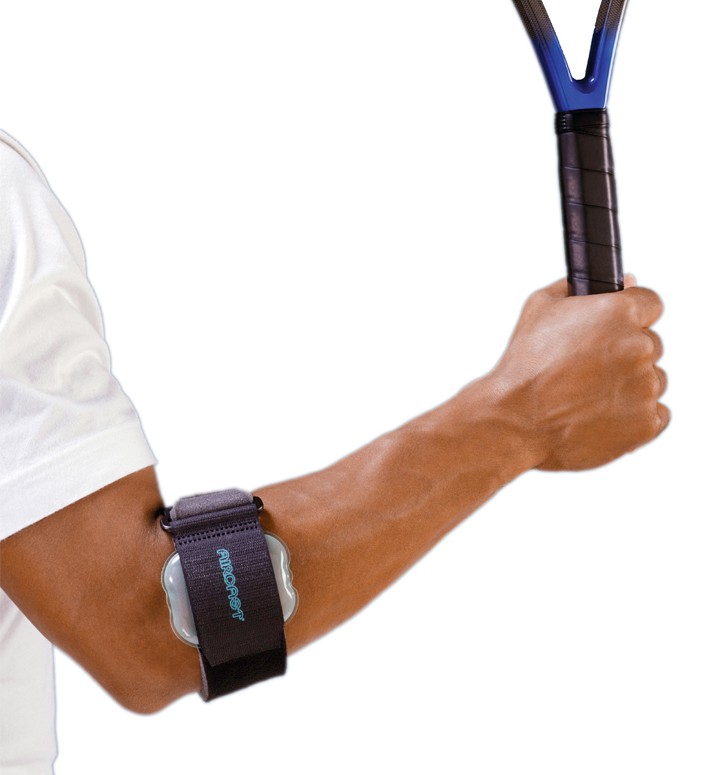
Tennis elbow is a frustratingly annoying problem that is life's little "Welcome to Mid-Life!" gift. It has been referred to as some derivation of tennis elbow since the 1880's. The name came about not because it was believed to be caused by playing tennis, but because the physician that published essays in the 1880's about this problem noted that playing tennis seemed to make it more painful. Since then, the moniker has stuck. The true cause is usually quite variable: tapping sugar maples, crochet, working power lines... it rarely is directly caused by tennis. Ultimately, the problem is that you no longer heal faster than you are injuring yourself. What occurs is that the tendons that attach the extensor muscles of your wrist to the lateral part of your elbow sustain "Microtrauma" through your daily over-use (tapping maples trees as an example). In the ideal 18 year old elbow, this microtrauma would heal perfectly, without you noticing. Unfortunately, as we age, we are unable to heal as effectively and instead of healing with normal tendon, we form a less organized structure that vaguely resembles tendon. These microtrauma events pile up and eventually you end up with lateral epicondylitis, traditionally referred to as Tennis Elbow. There are literally hundreds of "treatments" for lateral epicondylitis. Like many other things in medicine (the common cold) if there are a bunch of remedies, nothing works for everyone.

Monday, May 4, 2015
The Biology of ACL Reconstruction and Regeneration
One of the best examples of the wonders of modern medicine is Anterior Cruciate Ligament reconstruction. Because the body is unable to heal the ACL on its own, it requires reconstruction in order to restore normal function to the knee. The process of ACL regeneration relies heavily on the biology of your knee.
 When I reconstruct your ACL, I take a tendon, either from an organ donor or from a different part of your body, then place it where I want a ligament to grow. Your body uses this tendon as a scaffolding to regenerate a new anterior cruciate ligament. This process occurs and 3 phases. The initial phase is characterized by necrosis or cell death. During the first 4 weeks after surgery, your body tears down all of the living cells in the graft, leaving only nonliving tissue as a blueprint for the final ligament. The second portion of the regeneration process is called the proliferation phase. This usually occurs in the second and third month after surgery. This is characterized by influx in your own body’s cells into the remaining scaffolding. The scaffolding also undergoes changes that cause significant weakness in the graft. 6-8 weeks after surgery is typically thought of as the weakest point and the time where of the structure of the graft needs the most protection. The final phase, the ligamentization phase begins about 3 months after surgery. During this time, the graft is slowly and steadily getting stronger and becoming more like the original ACL. There is no clear end point however there is plenty of evidence suggesting that the graft will continue to mature over the following year.
Monday, April 13, 2015
Will My Frozen Shoulder Ever Get Better?
Frozen shoulder, or Adhesive Capsulitis is a frustrating and painful condition that typically effect people in the 40's and 50's. It almost sneaks up on you, feeling like a tweaked shoulder from doing something dumb like trying to catch the soda can as it rolls off the counter. It can be a very painful process to go through, interrupting your sleep, your work and effecting pretty much every aspect of your life. Along with the pain comes an inability to move your shoulder.

The frustrating part of this is that it doesn't matter how high a pain threshold you have or how hard you work to stretch, you can't make this go away any faster. Beyond that, there is not much I, as your surgeon and physician can do about it either. It has a mind of it's own. Aggressive physical therapy, forceful manipulation, surgery all fail to make this go away any sooner. My role in getting you better is primarily supportive. I can offer you cortisone injections to help make the pain bearable. I can show you some stretches to help make you shoulder slightly more useful, but ultimatelly, frozen shoulder thaws on its own schedule. Even worse... it can take up to 2 years to go away. Ulitimately, it does resolve and you should expect full use of your arm in time.
For more information, you can read this handout from the Journal of Orthopaedic and Sports Physical Therapy or call our office for and appointment.
The frustrating part of this is that it doesn't matter how high a pain threshold you have or how hard you work to stretch, you can't make this go away any faster. Beyond that, there is not much I, as your surgeon and physician can do about it either. It has a mind of it's own. Aggressive physical therapy, forceful manipulation, surgery all fail to make this go away any sooner. My role in getting you better is primarily supportive. I can offer you cortisone injections to help make the pain bearable. I can show you some stretches to help make you shoulder slightly more useful, but ultimatelly, frozen shoulder thaws on its own schedule. Even worse... it can take up to 2 years to go away. Ulitimately, it does resolve and you should expect full use of your arm in time.
For more information, you can read this handout from the Journal of Orthopaedic and Sports Physical Therapy or call our office for and appointment.
Wednesday, March 18, 2015
I am a 43 year old Athlete and I tore my ACL, now what?
The short answer is, you don't need it. As a sports medicine surgeon, I live to get people "back in the game", be that Eathampton HS football or the over 40 soccer leage at Allsports. However, most of life does not require an ACL. So why can I ski bumps without an ACL, but my kid's babysitter should have it reconstructed? The answer lies with age. In the over 40 population, it has long been thought that there are 3 groups of people who tear their ACLs: Copers, Adapters, and non-Copers.

If you are a Coper, with some dedicated rehab and a brace, you can return to all of the dumb things you were doing before you tore your ACL. If you are an Adapter, with some good rehab and a whiff of mortality, you get back to life and many of the things you were doing before, but you take a less aggressive approach to athletics. You limit the cutting, twisting, pivoting sports, but can remain active in athletics that are less "ACL Dependant". If you are a non-Coper, you knee feels unstable inspite of dedicated rehab and a brace, and you are unwilling to accept the limitations that this injury has foisted on you. In this case, there is decent evidence that an ACL reconstruction will help you stabilize your knee and get you "Back in the Game". For most middle aged athletes, life is busy and they don't have the time to jump right into the 6-9 month rehab that an ACL recontruction requires, so the most common recommendation is to try non-surgical management of the ACL tear and see how it goes.

If you are a Coper, with some dedicated rehab and a brace, you can return to all of the dumb things you were doing before you tore your ACL. If you are an Adapter, with some good rehab and a whiff of mortality, you get back to life and many of the things you were doing before, but you take a less aggressive approach to athletics. You limit the cutting, twisting, pivoting sports, but can remain active in athletics that are less "ACL Dependant". If you are a non-Coper, you knee feels unstable inspite of dedicated rehab and a brace, and you are unwilling to accept the limitations that this injury has foisted on you. In this case, there is decent evidence that an ACL reconstruction will help you stabilize your knee and get you "Back in the Game". For most middle aged athletes, life is busy and they don't have the time to jump right into the 6-9 month rehab that an ACL recontruction requires, so the most common recommendation is to try non-surgical management of the ACL tear and see how it goes.
Sunday, June 9, 2013
What to Expect after a Rotator Cuff Repair
If you are having, or considering having shoulder surgery, you should be aware of the recovery from the surgery.
Shoulder surgery hurts! There is no way around that one. Typically patients have difficulty getting back to their daily routine for about 2 weeks after surgery. It is difficult to find a comfortable position to sleep and it is hard to adapt to one good arm and one arm stuck in a sling.
Shoulder surgery hurts! There is no way around that one. Typically patients have difficulty getting back to their daily routine for about 2 weeks after surgery. It is difficult to find a comfortable position to sleep and it is hard to adapt to one good arm and one arm stuck in a sling.
Sports Medicine Lecture Series Kicks Off!
This May, the physicians at HampOrtho successfully kicked off a Sports Medicine lecture series at CDH. Drs. Fallon and McBride lead a fun and informative discussion on the Anatomy of Athletic Knee Injuries at the Cooley-Dickinson OR while giving a cadaveric demonstration of ACL reconstructions. It gave the participants the chance to see first hand the surgical anatomy of the knee and try their hand at arthroscopic surgery on a cadaver. Similar events are planned for this summer. It is designed as a free service to our local Athletic Trainers, so if you are an AT-C and interested, please contact our office manager and we will put you on the list.


Friday, December 28, 2012
Fartlek to Improve Your Training
Fartlek loosely translated:"Speed Training" is a form of interval training that was originally devised to help runners improve their performance. It is a staple of the German Nordic Ski program, US Marine Corps Officer training program and FBI training at Quantico. The principals behind Fartlek revolve around interval training, improving an athletes ability to race or compete at a higher, sustained level. Short (200-400m) near full effort burst are interspersed with similar length low effort legs. With the proper warm up, stretching and cool down; the physiologic benefits are measurable and it can effectively train the athlete to complete at a faster and more deliberate pace.
Tuesday, December 18, 2012
Mass Legislates Concussion Treatment Guidelines
The Commonwealth of Massachusetts has created specific guidelines for the on-field management of concussions as well as the steps required to return to sports.
Tuesday, October 25, 2011
Cutting Edge Rotator Cuff Repairs Done at CDH
New Double-Row Repair technique Improves Rotator Cuff Repair
A recent article in the American Journal of Sports Medicine supports the use of an advance arthroscopic technique that is currently employed by Drs. Fallon and McBride at Cooley Dickinson Hospital. The researchers tested multiple techniques used for arthroscopic Rotator Cuff Repair and found that the technique used at CDH has a significantly lower failure rate.
A recent article in the American Journal of Sports Medicine supports the use of an advance arthroscopic technique that is currently employed by Drs. Fallon and McBride at Cooley Dickinson Hospital. The researchers tested multiple techniques used for arthroscopic Rotator Cuff Repair and found that the technique used at CDH has a significantly lower failure rate.
Subscribe to:
Posts (Atom)